Decision models: the cheap AI built for sorting, not writing
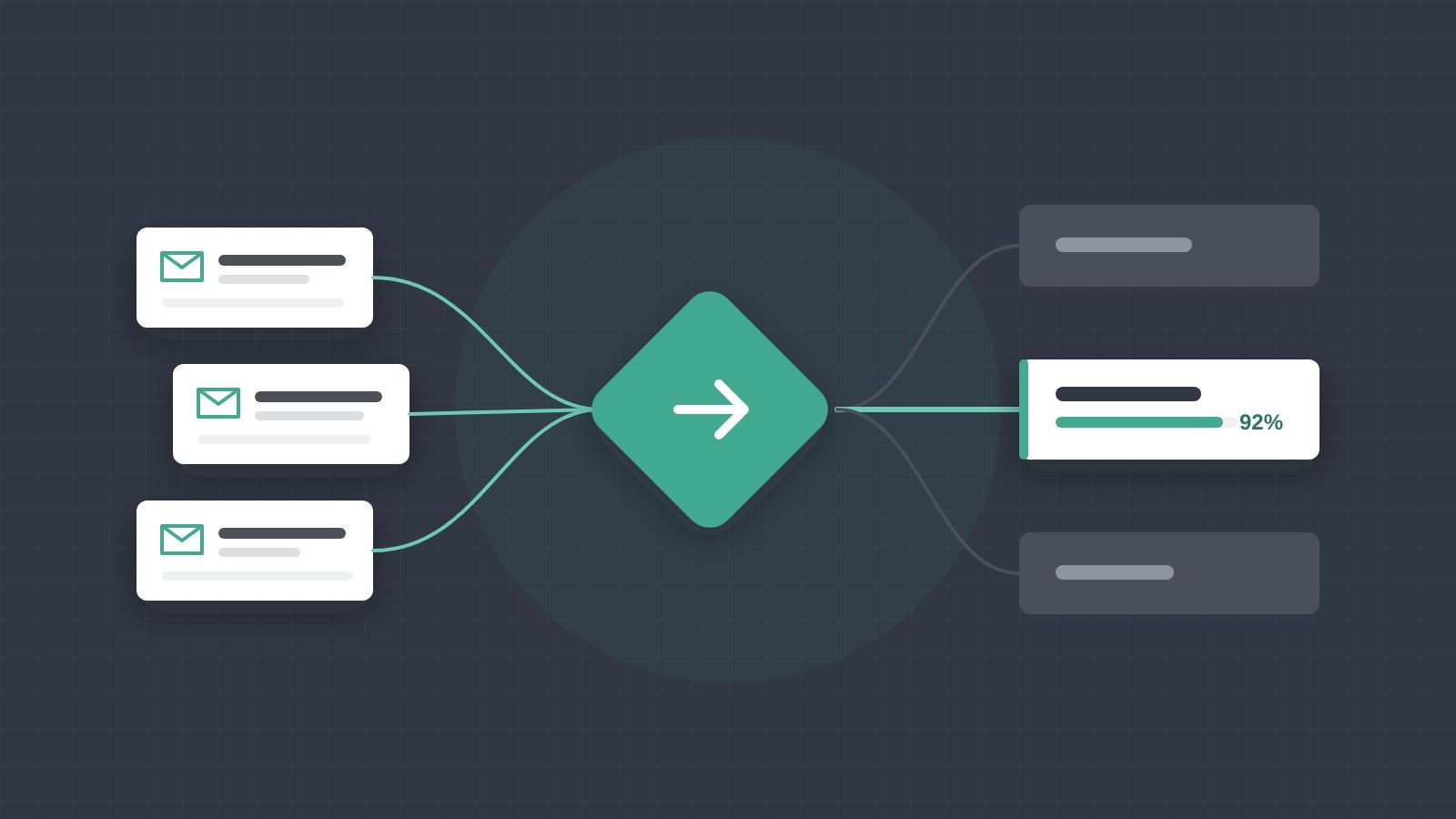
Most of the AI talk is about tools that write for you: draft an email, summarise a report, answer a question. But a lot of the AI work inside a business isn’t writing at all. It’s sorting and checking. Which team does this email go to? Is this ticket urgent? Does this photo show a hazard? For that kind of job there’s now a different type of AI model, and it costs a fraction of what a chatbot would.
These are called decision models, and they’re worth knowing about.
What is a decision model
A decision model doesn’t write anything. You give it some information and a fixed list of answers to choose from, and it picks one. Alongside the choice it gives you a confidence score, so you know whether it was sure or just guessing.
That’s the whole job. No paragraphs, no explanation, just a decision your systems can act on.
Decision models vs chatbots
Chatbots like ChatGPT and Copilot are built to generate text, and they’re priced for that kind of work. Ask one to sort ten thousand emails and it’ll manage it fine. You’re just paying a writing tool to do a sorting job.
A decision model is built for the sorting job and nothing else. Same task, far lower cost.
Why decision models are so much cheaper
AI tools charge per token, which is roughly three-quarters of a word. The gap in price is big enough to change your sums.
Microsoft’s decision model, for instance, charges around $0.04 per million tokens that go in, with the answer itself free. Push a billion tokens through it and you’re looking at tens of pounds. The same volume through a leading chatbot runs into thousands, before you’ve even paid for the reply it writes back.
In one developer’s test sorting business emails, a general chatbot was slightly more accurate but cost ten to twenty times more. Prices in this space shift often. A gap that size is worth paying attention to.
Popular decision models worth knowing
Several have launched in quick succession, so you’ve got real choice here:
- Jev, from US start-up TypeSafe, launched September 2026. The first of what it calls “System One” models.
- Microsoft-Decision-1, available through Microsoft Foundry since October 2026.
- OpenAI’s Decisions API, OpenAI’s own version, also reachable through Microsoft Foundry.
- Clef, Cloudflare’s set of open decision models, run through its platform.
They all do the same core thing: take some input and return a choice with a confidence score.
Where decision models are used
The sweet spot is high-volume, repetitive judgements. For example:
- Routing – sending each incoming email or ticket to the right team, based on whether it’s billing, a technical fault or a sales enquiry.
- Checking other AI’s work – reviewing what a chatbot produced before it goes any further.
- Approving actions – deciding whether an automated step is safe to run before it fires.
Anywhere a person is making the same small call hundreds of times a day, a decision model is usually a better fit than a chatbot.
The limitation to know about
There’s one important catch. A decision model won’t tell you how it reached its answer. You get the choice and the confidence score, but no reasoning behind it.
That’s fine for tagging emails. It’s not fine for a decision you might have to justify to a customer, an auditor or a member of staff. For anything where you’d need to show your working, keep a person in the loop or use a tool that can explain itself. It’s also worth knowing these models can be nudged by instructions hidden in the text you feed them, so they aren’t built to handle untrusted input on their own.
Used in the right place, though, a decision model is one of the easier ways to take cost out of the back end of your business without losing much, if anything, in accuracy.
If you want help steering your organisation in the right direction, get in touch.